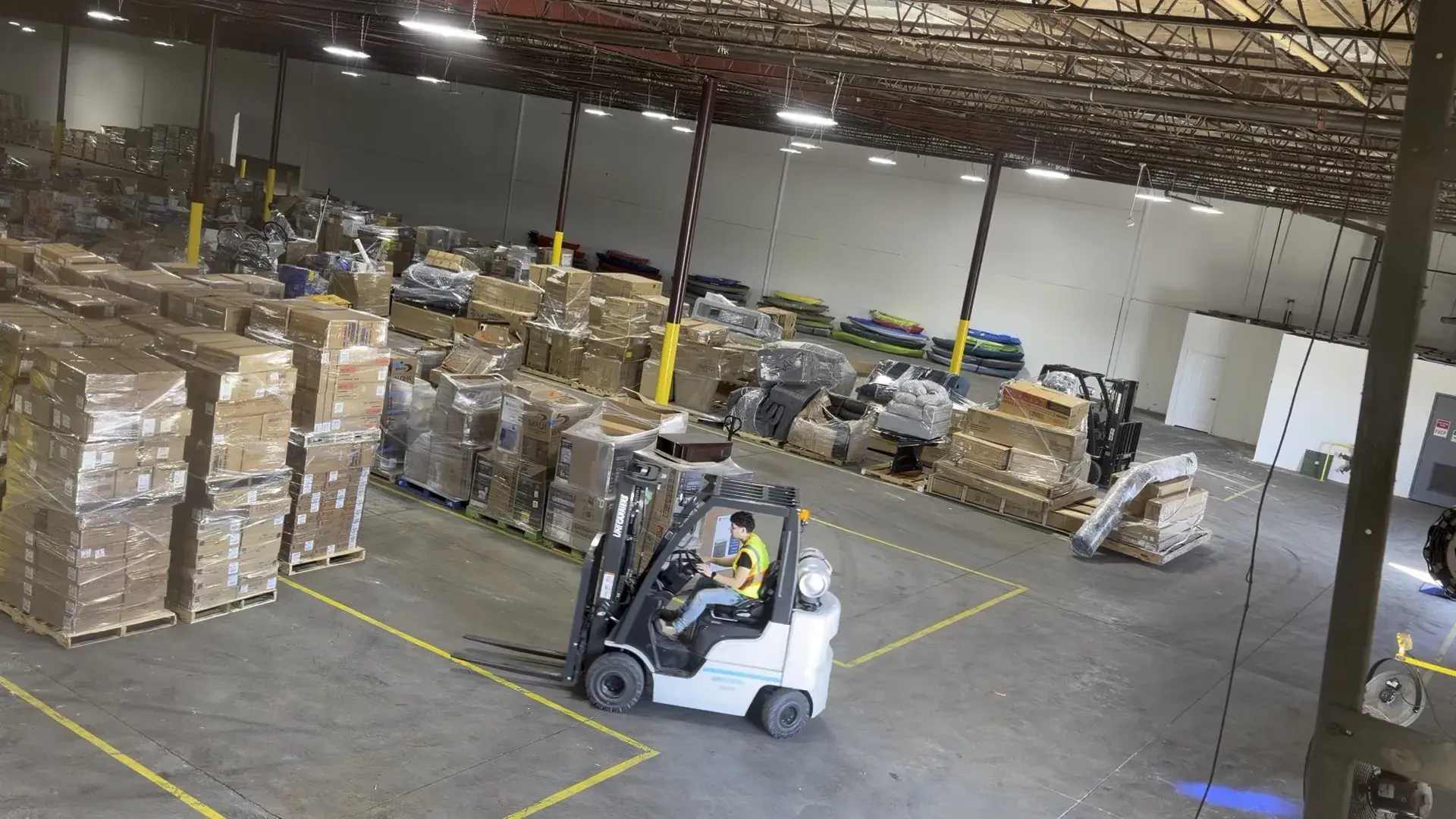
How to Buy Liquidation Pallets: A Beginner's Guide
How to buy your first liquidation pallet: conditions, manifests, % of retail and how to order wholesale pallets on viatrading.com with a free account.
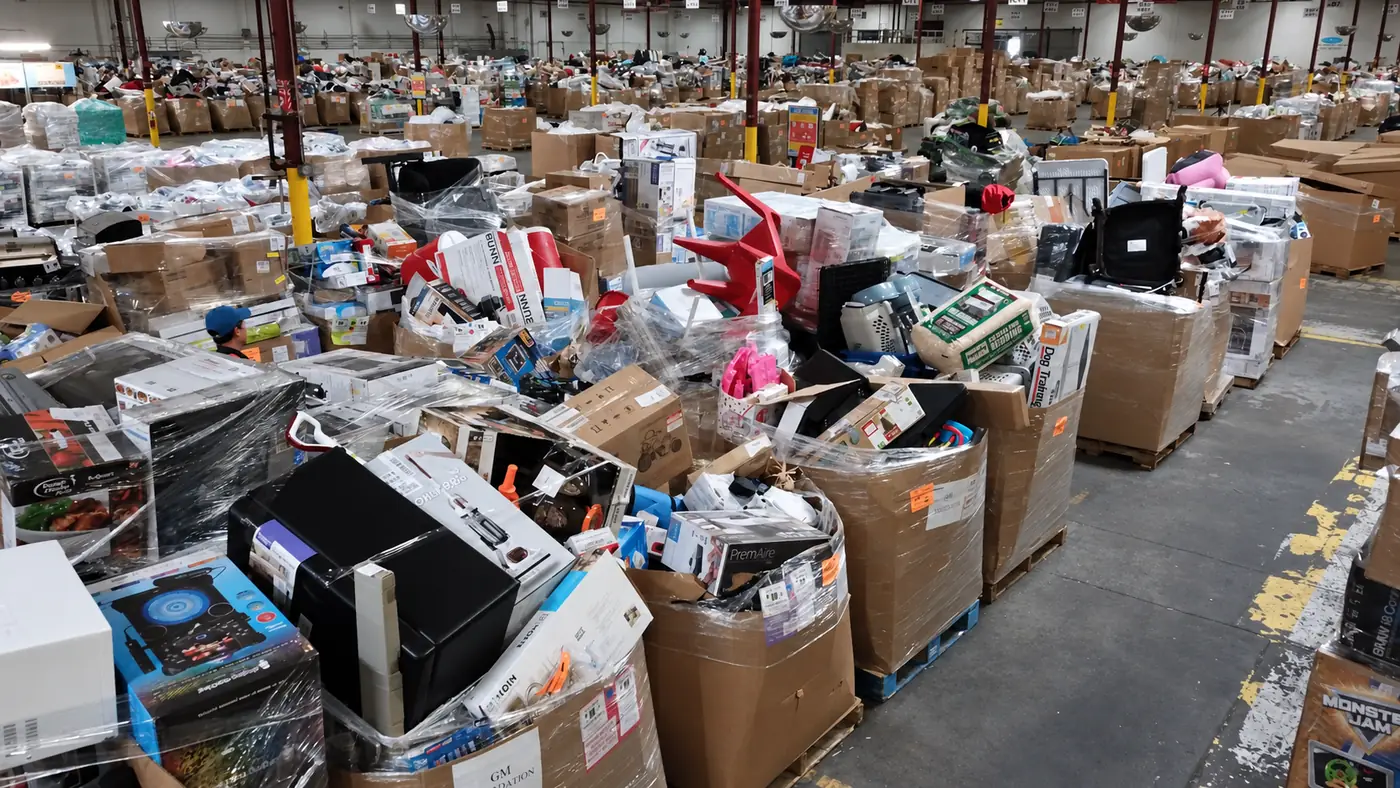
Liquidation pallets are pallets of returned, unsold or excess merchandise that retailers and manufacturers sell off in bulk, usually for a fraction of the original retail value. To buy one, you choose a source, read the listing (condition, manifest and price as a percentage of retail), open a buyer account, place the order, then pick it up or have it shipped.
The buying part is simple. Choosing the right pallet is the hard part: condition, manifest detail and freight matter more than the headline price.
This guide walks through each step the way it works at Via Trading, a wholesale liquidator selling cases, pallets and truckloads since 2002 from facilities in Lynwood (Los Angeles area), California and Tampa, Florida.
What is a liquidation pallet?
A pallet is the wooden, plastic or composite platform that merchandise is stacked on so a forklift or pallet jack can move it. A standard U.S. pallet is often about 48" × 40", although heights and weights vary a lot (see the glossary: pallet).
In liquidation, "pallet" also means the unit you buy: one pallet of goods sold as a single lot, holding one product, one category or an assorted mix. Unit count, value and price vary from pallet to pallet.
Pallets sit in the middle of the lot sizes you can buy:
- Cases: the smallest wholesale lot.
- Single pallets: the usual starting point for a reseller with a truck, a garage or a small warehouse.
- Multi-pallet lots: several pallets sold together, typically shipped LTL.
- Full truckloads: dozens of pallets and thousands of units, for buyers with the space, labor and capital to process them.
Where liquidation merchandise comes from
Liquidation inventory comes from retailers, manufacturers, distributors and importers that need to clear goods they can't sell through their normal channels. Major US retailers, big-box stores and online retailers send customer returns and pulled stock into liquidation programs. Manufacturers and distributors move surplus, discontinued products, items with packaging changes and leftover seasonal goods.
Other loads come from one-off events such as store or warehouse closures, insurance or freight-related inventory and special closeouts. Some programs are steady, so similar merchandise comes back regularly. Others appear once and never return in the same form.
Not every pallet sits in a Via Trading warehouse. Many listings ship directly from their point of origin, and each listing shows its location (the FOB point), which affects freight cost and whether pickup is possible.
Product conditions: customer returns, shelf pulls and new overstock
Condition is the biggest factor in what you will find on a pallet and how much work it takes to resell. Via Trading groups most merchandise into four primary product conditions:
- Master Case: new merchandise in original manufacturer packaging, generally never displayed in a store. It needs the least preparation before resale.
- New Overstock: new, unused excess inventory that was never sold to a consumer. Packaging style and packaging condition can vary.
- Shelf Pulls: products removed from store shelves or online inventory without being bought. Generally new, but they may carry price stickers, clearance labels, security tags or worn boxes.
- Customer Returns: products a consumer bought and then returned. Expect a mix of new, opened, used, working and non-working items, sometimes missing parts or packaging.
Customer returns are popular because their liquidation cost can create resale opportunities, but they carry the most risk and the most labor: inspecting, testing, cleaning and repackaging. Never assume a returns lot contains a specific percentage of working merchandise unless the listing says so. Shelf pulls normally need less processing than returns, and overstock even less, which makes them an easier way to learn the trade.
Manifested vs. unmanifested pallets
A manifest is the list of what is expected in the lot. Listings fall into three groups:
- Manifested: an itemized list with descriptions, brands, quantities, SKUs or UPCs and approximate retail values, depending on what the source supplies (see the glossary: manifested).
- Partially manifested: grouped information, such as quantity by brand or category, without every item.
- Unmanifested: no item-by-item list. You judge the lot by source, category, condition, estimated quantity and photos.
For a first purchase, manifested pallets let you check the numbers before you commit. Manifests come from the retailer or merchandise source, so expect small discrepancies in quantities or descriptions. A manifest is a reference, not a guarantee of condition or resale value.
Before buying, price-check the items that carry the most dollar value on the manifest against current prices where you plan to sell. A few overstated retail values can make a load look better than it is.
How much does a liquidation pallet cost? (% of retail)
Liquidation is usually priced as a percentage of the stated retail value of the merchandise (sometimes of its wholesale value). If a manifested load has an aggregate retail value of $70,000 and is priced at 15% of retail, the purchase price is $10,500. On a smaller scale, $2,000 of retail value at 20% costs $400, and across 100 units that is $4 per unit.
The percentage depends on condition, category, brand mix and how much information comes with the lot. Keep two things in mind:
- Retail value is not resale value. The figure may be an original retail price, MSRP or another reference the vendor supplied. What you actually sell for depends on condition, demand, selling channel and competition.
- The pallet price is not your total cost. Add freight, sales tax where it applies, payment and selling fees, the labor to sort and test, and the items you won't be able to sell.
Results vary from load to load, and no price guarantees a profit. For a closer look at the trade-offs, read are liquidation pallets worth it?
How to buy wholesale liquidation pallets on viatrading.com
Here is how buying works, step by step. There is no membership fee and no minimum dollar order, so a single pallet is a perfectly normal first order.
- Browse without an account. Inventory and pricing are public. Filter by category, condition, lot size and location.
- Create a free account. Registration takes a couple of minutes, the account is active immediately and there is no obligation to buy. You need it to see detailed manifests, get shipping quotes, place an order or make an offer.
- Compare loads in the Load Center. It shows every available SKU in one view, from cases to truckloads, with filters for condition, location, lot size and manifest status. Open a manifest to see which items carry the most value, or summarize it by brand or category with one click.
- Get a freight quote. Most domestic U.S. shipments can be quoted online, in your cart, before you buy.
- Place the order or make an offer. Add pallets to your cart and submit, or use Make an Offer on eligible listings. Submitting does not reserve the merchandise: we first confirm availability, final price, taxes and shipping or pickup.
- Pay within 48 hours. Once the order is confirmed you receive payment instructions. Merchandise is released after full payment.
You can also buy through an Account Manager by phone, email, WhatsApp or live chat, or walk into the Los Angeles or Tampa facility Monday through Friday, 8 AM to 6 PM local time, inspect the merchandise and buy in person. No appointment is needed.
Unless a listing says otherwise, merchandise is sold as-is and all sales are final.
Pickup or shipping
Shipping is generally priced separately. The right method depends on how much you buy and where it is going:
- LTL freight: for one or a few pallets that don't need a full truck. Cost depends on weight, number of pallets, dimensions, destination and extras like a liftgate or residential delivery.
- Full truckload: flat pricing based mainly on the route and the equipment.
- International: air freight and ocean containers, quoted by the team.
- Pickup: collect your order at the Lynwood or Tampa facility during business hours.
Many orders ship within 24 hours of payment, and domestic U.S. shipments generally arrive within 1 to 7 business days after they ship.
If you pick up, collect the order within 48 hours of confirmation. Whole pallets can be loaded by forklift into a suitable truck, van or trailer, but individual items are not hand-loaded, so make sure the order fits and bring straps. Buyers within about 150 miles of either facility may qualify for subsidized local delivery: up to 12 pallets for one flat rate starting at $150, with residential delivery and liftgate included.
FAQ
Do I need a business license to buy liquidation pallets?
Not to buy from Via Trading. Businesses and individual resellers can purchase. Your state, country or local jurisdiction may require permits or registration before you resell, and tax-exempt purchases may require a valid resale certificate.
Can I buy just one pallet?
Yes. There is no minimum dollar order and no membership fee. Many listings are available by the case, by the pallet or as a smaller lot.
Can I see what is on a pallet before I buy it?
Manifested listings show an AI-generated summary without signing in, and registered buyers can view and download the detailed manifest where available. You can also visit the Los Angeles or Tampa facility during business hours and inspect merchandise in person.
Can I return a liquidation pallet?
Unless the listing states otherwise, liquidation merchandise is sold as-is and all sales are final. If something is not right with an order, contact Via Trading as soon as reasonably possible after inspection.
Inventory is updated throughout the day. Browse the Load Center to see what is available right now.