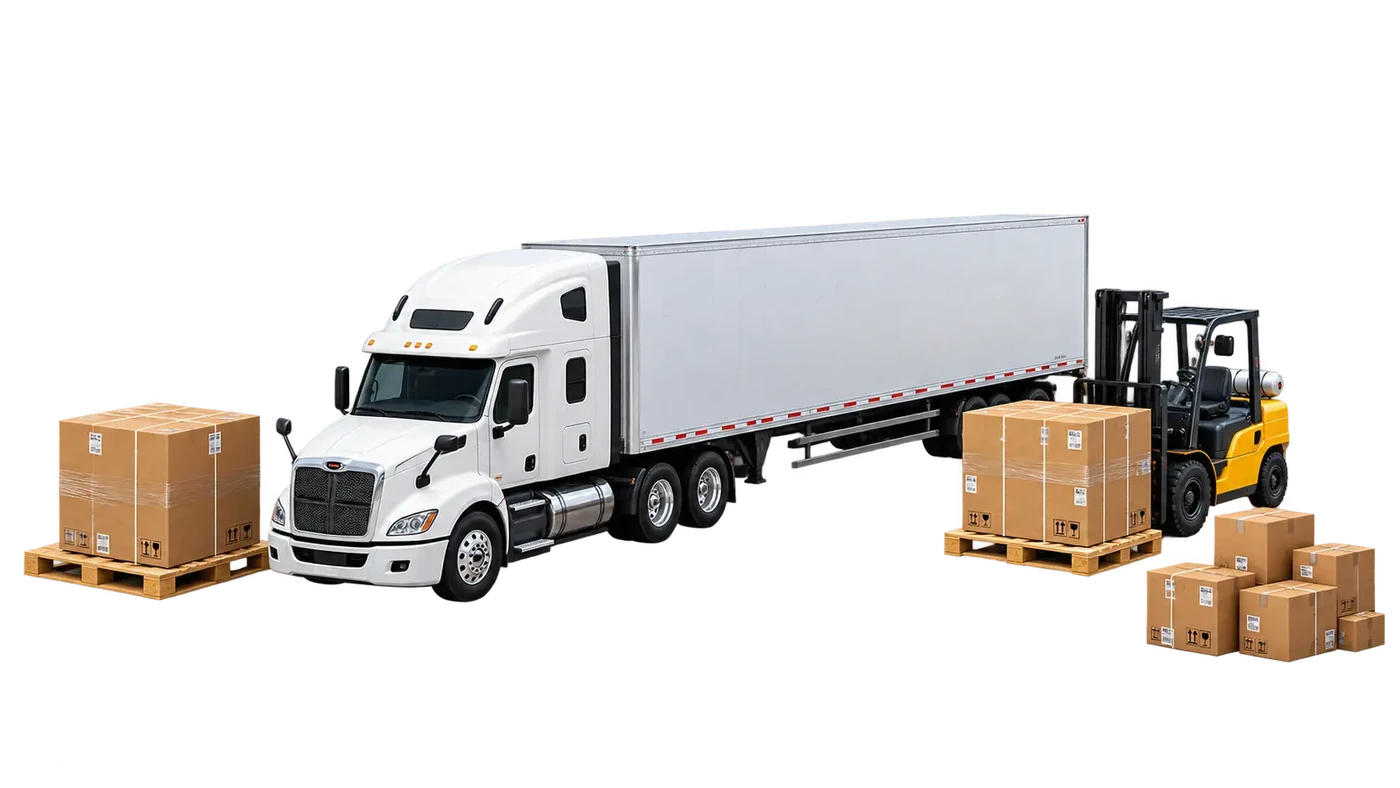
Via Trading ships merchandise throughout the United States using a variety of shipping methods depending on the size of the order, merchandise, shipping origin and delivery destination.
From individual cases to pallets and full truckloads, our logistics team and account managers help identify the most practical and cost-effective shipping option available for your order.
Get Your Shipping Cost Online
For most domestic orders, Via Trading can provide estimated shipping costs and available shipping options directly through our website.
Simply add merchandise to your Shopping Cart to review available shipping methods and estimated freight costs before completing your order.
Courier & Case Shipments
Smaller orders and case-packed merchandise can often be shipped by courier using carriers such as FedEx.
Courier shipping is typically best suited for merchandise packed in individual boxes rather than on pallets.

Pallet / LTL Shipping
LTL: Less Than Truckload, shipping is typically used when an order consists of one or more pallets but does not require an entire trailer.
LTL is one of the most common shipping methods used for wholesale liquidation merchandise.
Depending on the order, multiple pallets may be combined into a single LTL shipment or consolidated into a Full Truckload when doing so provides a better freight option.
LTL shipments can vary from 1 to 6 pallets. Orders over 6 pallets may need to be consolidated into 6 pallets, shipped as 2 LTL shipments or shipped as a Full Truckload. We always provide you with the best shipping option for your review prior to finalizing your order.

What Affects LTL Shipping Cost?
LTL freight rates are generally determined by several factors, including:
Number of pallets being shipped
Size and weight of the pallets
Type of merchandise
Shipping origin and destination
Commercial or residential delivery
Loading dock or forklift availability
Liftgate or other delivery requirements
Receiving an LTL Shipment
Before ordering palletized merchandise, make sure your delivery location is prepared to receive freight.
Commercial Deliveries
Locations with a loading dock or forklift will generally be the easiest and most economical locations for pallet delivery.
Commercial locations that are not equipped with a loading dock or forklift will also require a lift-gate.
Residential Deliveries
Residential deliveries may require additional services such as a liftgate and may involve additional freight charges.
Generally, pallet deliveries to a residence will require a lift-gate to lower the pallets to the ground. LTL carriers charge extra for residential deliveries, typically a flat fee of between $25-$75, and also charge extra for trucks with lift-gates, typically a flat fee of around $25-$75.
If you have the option to receive your order at a friend’s place of business or pick it up from the local terminal, it could save you some money.
Curbside Delivery
Pallet deliveries are generally made curbside or to a commercial loading dock.
Drivers typically do not move merchandise into your warehouse, building, garage or storage space.
You should be prepared to move the merchandise from the delivery point after it is unloaded.
For insurance and safety reasons, trucking carriers do not allow customers to climb onto the truck to manually unload their pallets.
Full Truckload Shipping
Larger orders can often be shipped more economically as a Full Truckload (FTL).
Most domestic truckloads move in 53-foot trailers, filled with merchandise on pallets or hand-loaded, although trailer type and configuration may vary depending on the merchandise and shipment.
Truckload freight is generally priced based on the shipment origin, destination, equipment required and current freight conditions. Truckloads usually cost a flat rate to ship, irrespective of whether the truck is full or half empty, so larger orders that cannot be shipped economically as LTLs can often be cheaper to ship as a full load.
Truckloads can be ordered with or without a lift-gate. Trucks with lift-gates can often be costly and it may be cheaper to rent a forklift for a day to assist you in unloading the truck. This is especially true when the merchandise is traveling long distances.
Most shipments can usually be moved OTR (over the road) on a regular truck, but occasionally, especially to distant locations, shipping by rail can be cheaper. Rail shipment procedures are the same as truckload procedures, but the shipping time is usually a bit longer. While truckloads can reach their destination within 1-6 business days, rail shipments can typically take around 10-15 days to arrive.
How Much Fits on a Truck?
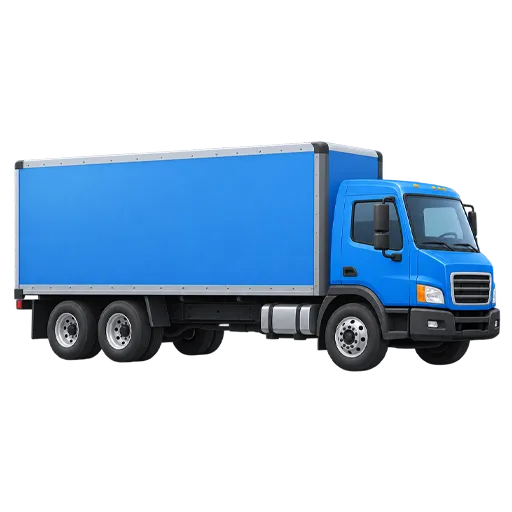
Truck capacity depends heavily on the merchandise and how it is packed.

Standard Palletized Load
A standard 53-foot trailer can typically accommodate approximately 26 standard pallet positions when pallets are loaded directly on the trailer floor.
Double-Stackable Merchandise
When merchandise can safely be double-stacked, a trailer may accommodate up to approximately 52 pallets.
Many types of pallets can be double-stacked (assuming pallet height is not greater than 4’), allowing between 26 and 52 pallets on the truck and minimizing your overall landed cost per pallet.
Hand-Loaded Merchandise
Certain merchandise may be loaded without pallets, allowing significantly more product to fit into a trailer.
Some goods can be consolidated further or even hand-loaded. For example, a 70 pallet load may be able to be consolidated into 52 pallets, or 2 full loads may be able to be hand-loaded into a single truck.
Actual truck capacity will vary by product, pallet dimensions, height, weight and packaging.
| Size | Depth | Width | Height | Cubic Capacity | Pallets | Pallets Double-Stacked |
|---|---|---|---|---|---|---|
| 48’ Trailer | 47’6” | 8.3’ (100”) | 9.0–9.2’ (108–110”) | 3,500–3,600 cu ft | 22 | 44 |
| 53’ Trailer | 52’6” | 8.3’ (100”) | 9.0–9.2’ (108–110”) | 3,900–4,000 cu ft | 26 | 52 |
Receiving a Full Truckload
Before arranging a truckload delivery, make sure your location can accommodate and unload a full-size tractor trailer.
You should:
- Confirm that a 53-foot trailer can safely access your location, in terms of street size, parking and reversing room.
- Have the equipment and manpower necessary to unload the shipment.
- Be prepared to receive the truck during the scheduled delivery window. You will most likely need to provide the day(s) and time that you can receive the load and whether you need to be notified in advance of the truck’s arrival.
- Unload the trailer within the carrier’s allotted unloading time, typically two (2) hours.
- Understand that detention charges may apply if unloading takes longer than allowed. This is standard practice in the freight industry.
- Remember that shipping charges do not include any labor and drivers generally do not provide unloading labor. If the truck is ordered with a lift-gate, the driver will move the pallets to the rear and operate the lift-gate to lower the pallets to the curb.
- Verify any trailer seal number before opening the trailer when a sealed load is delivered. Each truck has a seal with a unique number, and it should match the number on the packing slip you receive with the load.
Before Accepting Any Freight Delivery
Always inspect your shipment before signing the delivery paperwork.
Check the pallets, cartons and shrink-wrap for visible signs of:
Damage
Missing merchandise
Opened packaging
Broken shrink-wrap
Tampering
If you see visible damage or shortages, make a clear notation on the Bill of Lading or delivery receipt before signing it.
If your pallet shows signs of having been opened, rummaged through, stolen from or otherwise tampered with during shipping, it is your responsibility to make a note of this on the Bill of Lading before you accept the merchandise. Failure to make annotations will significantly lower the chances of receiving any kind of compensation from the shipping company.
Documenting visible freight damage at the time of delivery can be important when filing a carrier claim. Whenever possible, take photographs of any visible damage before unloading the shipment.
Freight Coverage
Shipments are sent with minimal insurance. If you are shipping very expensive merchandise, please ask for additional insurance.
Standard carrier liability may provide limited protection and should not be considered full merchandise-value insurance.
Additional freight coverage may be available upon request.
If you are purchasing higher-value merchandise and would like additional coverage, please contact our team before the order ships.
Need Help With Domestic Shipping?
Most domestic shipments can be quoted directly through our website.
For shipments that cannot be automatically quoted, or if you need assistance determining the best shipping method for your order, our Sales and Logistics teams are available to help.
Ready to Start Buying?
Browse inventory and pricing without an account. Create your free account when you’re ready to access detailed manifests, shipping quotes and buyer tools.