Customer Returns vs. Shelf Pulls vs. Overstock
Customer returns were bought and sent back, shelf pulls were never sold, and new overstock never left the supply chain. What each condition means for price, prep work and where you can sell it.

Customer returns vs shelf pulls comes down to one question: did a shopper ever take the product home? Customer returns were bought by a consumer and sent back. Shelf pulls were offered for sale in a store or online and removed from inventory without ever being sold. New overstock is excess inventory that never reached a consumer at all.
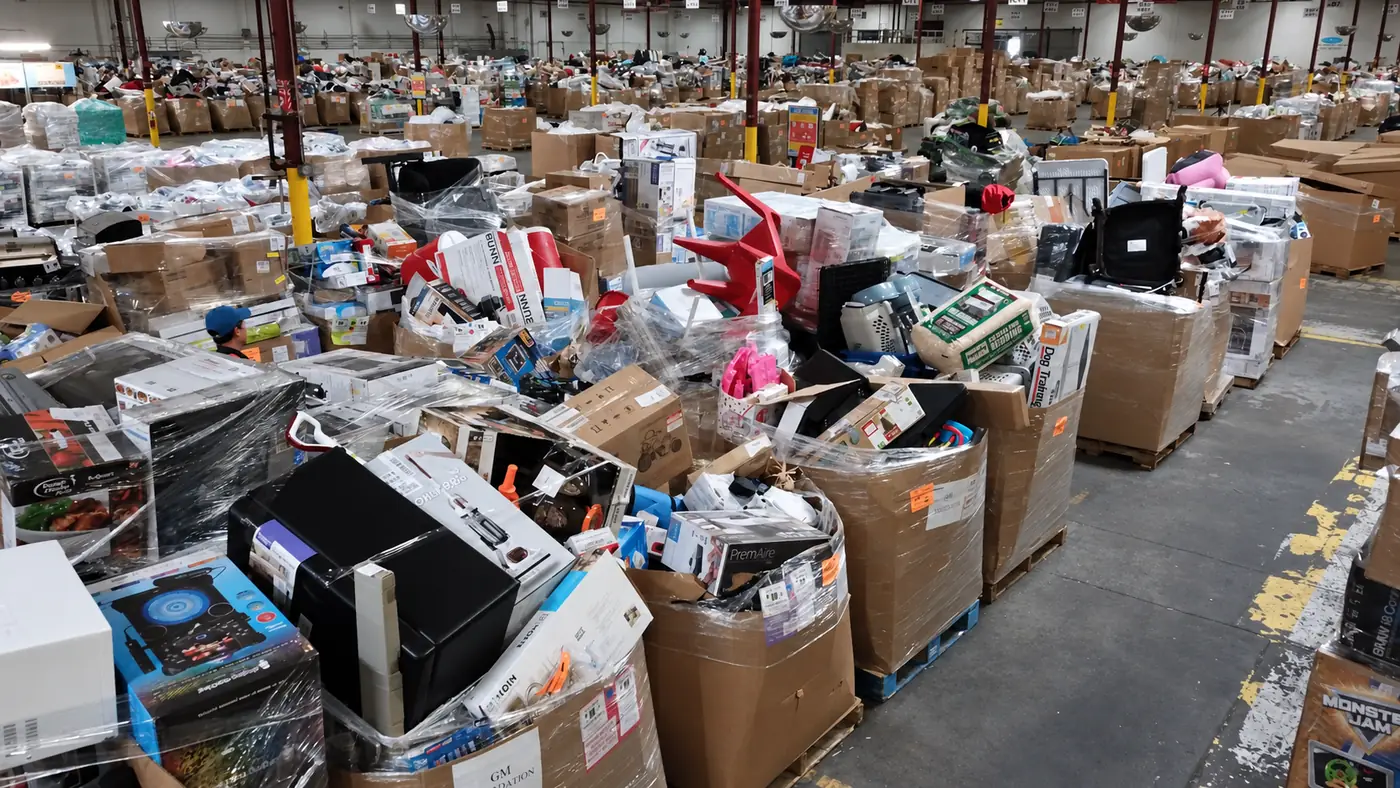
That history decides what arrives on your dock. New overstock is generally new, unused and in retail packaging. Shelf pulls are generally new too, but may carry clearance stickers, security tags or worn boxes. Customer returns are mixed: new, open-box, used, incomplete, working and non-working items can share the same pallet.
This guide follows the definitions on our product conditions page and adds what they mean for price, workload and where you sell. Read it as a customer returns buying guide that also shows the two conditions they are most often compared with.
What are customer returns?
Customer returns are products a consumer purchased and then returned to a store or an online retailer. People return things for many reasons: wrong size or color, a change of mind, a missing part, damage in delivery, or a function that did not work.
Retailers process returns differently. Some returned items are inspected or tested; others get only a limited visual check before they enter a liquidation program. That is why customer return pallets can include:
- New and apparently unused merchandise, next to open-box and previously used products
- Working, partially working and non-working items
- Products with cosmetic blemishes or damaged, missing or replaced packaging
- Incomplete sets and items missing parts, accessories or instructions
- Store displays, demo units and products with return or inventory labels
- Some shelf pulls or overstock mixed into the program
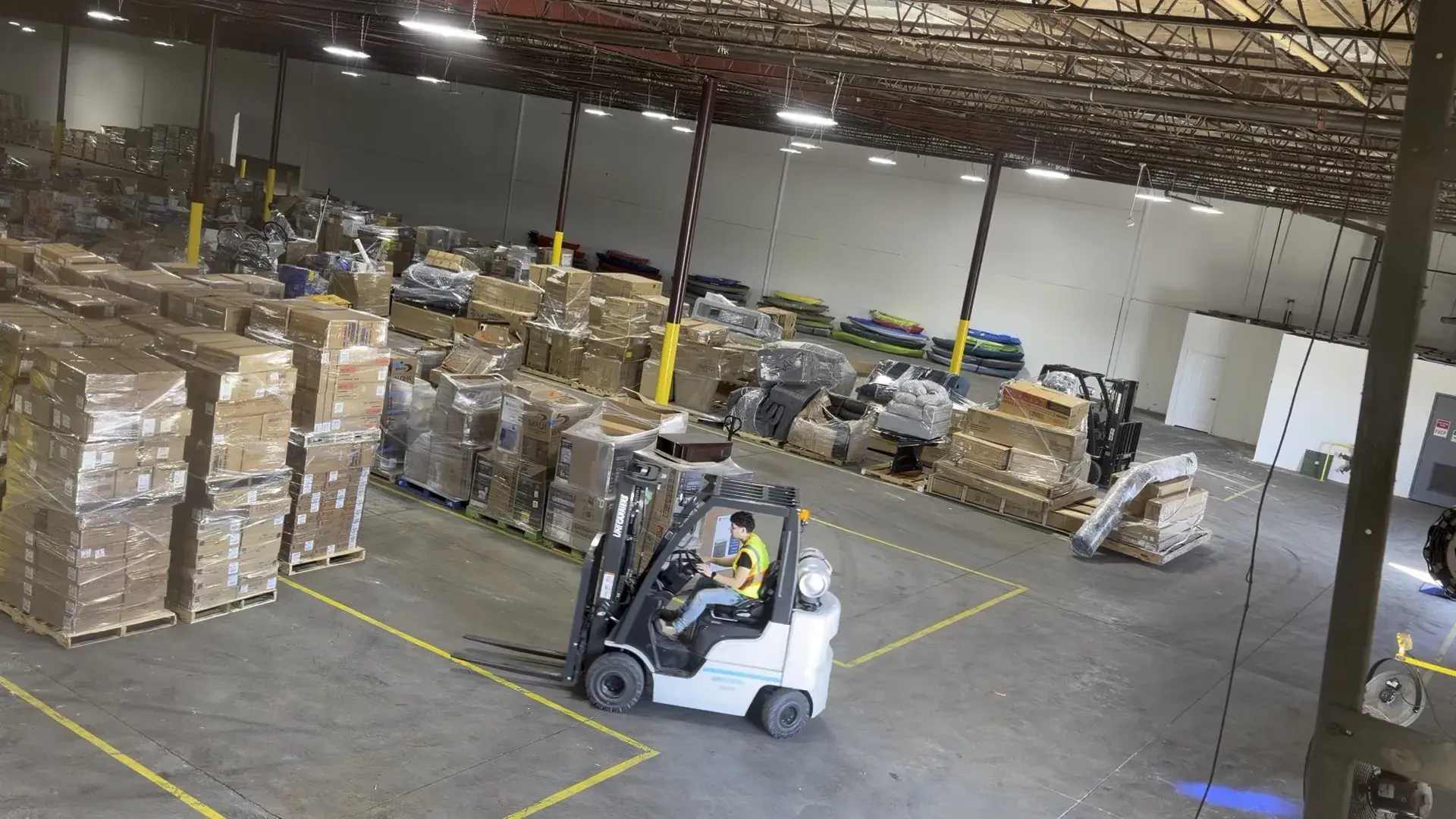
The most important rule: do not assume any percentage of working, complete or resalable items in a customer return lot. A percentage applies only when the individual listing states it. If it does not, plan as if anything on the list above can show up. The glossary entry for customer returns puts it the same way, and for a walk through the warehouse you can watch What are customer returns?
Working is not the same as salable
An item that is incomplete or does not fully work can still have resale value. An incomplete cookware set can be sold by the piece. A damaged appliance can be a source of replacement parts. A device that works but lacks a cable can be completed and sold as open-box. Experienced buyers price each item for what it can realistically become, not only for whether it sells as new.
For a full walkthrough of this condition, see the Customer Returns Buying Guide.
What are shelf pulls?
Shelf pulls are products that were offered for sale in a store or online, then removed from active inventory without being bought. They are generally new and unused, but they may have been displayed, handled or moved several times.
On shelf pull pallets you can typically expect:
- New and unused products, often still with original retail tags or price stickers
- Clearance or discount labels, security tags or store identification labels
- Opened, distressed or imperfect packaging
- Display units, samples, and discontinued, seasonal or end-of-line merchandise
- Minor cosmetic marks from handling
Shelf pulls normally need less processing than customer returns. You will still inspect, sort and prep before resale (peeling stickers, cleaning, repacking a crushed box), but you are not testing every unit the way you would with returns. See also the glossary entry for shelf pulls.
What is new overstock?
New overstock is excess merchandise that was never sold to a consumer. It comes from retailers, manufacturers, importers or distributors clearing surplus inventory, discontinued products, packaging changes or extra seasonal stock. The glossary entry for new overstock notes it is sometimes simply called overstock or closeout merchandise.
Expect new, unused products in original retail packaging, inside or outside their master case. Some items may be discontinued or from a previous season, and packaging style and condition can vary. Of the three, this is the condition that needs the least preparation before resale.
If you buy overstock wholesale to stock shelves, new overstock pallets sit close to master case goods: master case is the fourth primary condition, new merchandise still in the manufacturer's original case or factory packaging.
Risk vs. price: why each condition costs differently
As a rule of thumb, part of what you pay for is how much work is left to do. With overstock, most of the work is selling. With shelf pulls, you add sorting and cleanup. With customer returns, you add receiving, testing, grading, repairs, parts sourcing and disposal of what cannot be sold. Labor, supplies, replacement parts, storage, transportation and disposal all belong in your math.
Customer returns vs shelf pulls vs overstock: examples from live loads
Condition is not the only thing that moves the price. A look at listings on the site in mid-November 2026:
- Customer returns: manifested truckloads of bedding, outdoor and general merchandise returns from big-box retailers, 21 to 25 pallets each, shipping from Los Angeles, listed at 19% to 23.5% of retail. Single manifested pallets of returned shoes and apparel were listed at 16.5% of retail. Unmanifested return truckloads are listed at a flat price per load instead, roughly $13,600 to $19,900, with no percent of retail.
- Shelf pulls: manifested 1 to 3 pallet lots of shoes and apparel shipping from Tampa at 14% of retail, and manifested truckloads of grocery, drugstore, apparel and home goods from an online retailer, 24 pallets and roughly 8,700 to 21,200 units each, shipping from Los Angeles, at 8.5% of retail. Single cases and pallets of one product, such as belts or pool floats, were listed at 25% of retail.
- New overstock: manifested pallets of golf apparel and accessories shipping from Florida at 6.5% of retail, a 40-pallet manifested truckload of ceramic dishes and trays at 12%, and 13-pallet loads of beds and headboards from Los Angeles at 30%.
Notice the shelf pull truckloads list lower than the returns truckloads. Category, unit count, how deep the assortment is and how the lot is packed all weigh in. Percent of retail is a starting point, not a condition score.
Also remember that retail value is the retailer's recorded or original value. What you actually get depends on condition, demand, competition, your selling platform and how much processing you put in. Unless a listing says otherwise, liquidation merchandise is sold AS-IS, and no condition comes with a guaranteed profit.
Which condition fits your sales channel
Start from where you sell, then pick the condition that fits it:
- Retail-ready shelves or new-condition listings on Amazon: new overstock or master case. Check each marketplace's condition rules before you list.
- Bin stores, discount stores, swap meets and flea markets: shelf pulls work well, since a clearance sticker or a scuffed box rarely stops a bargain shopper.
- eBay, open-box, used and parts listings, or a repair bench: customer returns, if you have the time, space and category knowledge to test and grade.
- Several channels at once: customer returns again, because different conditions inside one load can go to different outlets.
Customer returns are a poor fit if you need every item new and retail-ready, cannot test merchandise, lack room to process a shipment, or depend on one restrictive channel. If those answers are unclear, start with a smaller purchase or a lower-processing condition. Our guide on how to buy liquidation pallets walks through the full process for a first order.
How to filter by condition in the Load Center
The Load Center brings every available SKU into one view, manifested and unmanifested, from cases and pallets to multi-pallet loads and truckloads, updated in real time. To narrow by condition:
- Open the Load Center or one of the condition pages linked above; each condition page already has its condition filter applied.
- Under Condition, choose Customer Returns, Shelf Pulls, New Overstock, Master Case or Irregulars (combine them if you are open to more than one).
- Add Packing (case, pallet, LTL or load), Location (Los Angeles or Tampa), Manifest status and a price range.
- Open the manifest. By default it lists the items that make up the largest share of the load's dollars first, and one click summarizes it by brand, category or other available fields.
You can browse inventory and pricing without an account; a free account gives you detailed manifests, shipping quotes and buyer tools. If something about a specific load is unclear, ask your Via Trading account manager before you buy.
FAQ
Are shelf pulls new?
Generally yes. Shelf pulls are new and unused, but they may have been displayed or handled and can come with retail stickers, clearance labels, damaged packaging or minor cosmetic marks.
What percentage of customer returns work?
There is no standard percentage. Customer returns are not a standardized grade, so a working or salable percentage applies only when the individual listing states it.
Is new overstock the same as closeout?
The terms overlap. New overstock is sometimes called overstock or closeout merchandise. Closeout describes goods sold below their original value because they are discontinued, overstocked, seasonal or being cleared, and they are generally new.
Can a customer return load include shelf pulls or overstock?
Yes. Shelf pulls or overstock can be mixed into a customer return program, which is one reason condition varies within a single pallet or load.
What does tested-working mean?
Tested-working merchandise has been tested and considered functional based on the testing described in the listing. It does not necessarily mean new, cosmetically perfect, complete or covered by a warranty.
Do liquidation pallets include a warranty?
Do not assume one. Manufacturer warranties apply only when the listing expressly includes them, and unless otherwise stated, merchandise is sold AS-IS under Via Trading's Sales and Return Policies.
Compare the three conditions on real manifests before you commit to a channel or a load size. Shop customer returns, or switch the condition filter to shelf pulls or new overstock to see what is live today.